
Export compliance and end user registration
Why this page exists
High end GPUs are controlled items under the US Export Administration Regulations (the EAR), administered by the Bureau of Industry and Security (BIS). That is true whether the GPU is in a server, in a workstation or in a box on its own. It applies to HGX B300 and B200, H200 NVL, RTX PRO 6000 Blackwell Server Edition, L40S and the NVL72 racks, and in some situations to high end workstation cards. On top of the regulations, NVIDIA requires its channel partners to register the end user of data center GPUs before shipment.
None of this is a reason to worry. Almost every order we handle for a customer in the United States or Canada clears without a question. The point of this page is to tell you what we will ask for and why, so that your order is not held up waiting for an answer.
The four rules in plain English
NVIDIA end user registration
Before a data center GPU ships, we record who will use it and where it will be installed. That means the legal name and address of the end user organization, the physical address of the deployment site, and a short description of the end use. If you are buying for a customer of your own, we need the final user, not just your company. We submit this to the manufacturer and keep a copy for our records.
No access from embargoed countries
Controlled GPUs cannot be exported to, or re-exported to, or made available for use by persons in, countries subject to a US embargo or to the specific GPU controls in the EAR. The list changes; it currently includes countries under comprehensive sanctions and a longer list of countries where advanced computing items need a license. The rule covers remote access too: a server in Toronto is still subject to the rule if its users log in from a controlled destination. You confirm that you will not do this, and that you will apply reasonable controls to stop it.
Restricted party screening
US law prohibits dealing with people and organizations on government restricted lists (the Entity List, the Denied Persons List, the Specially Designated Nationals list and others). We screen the buyer, the end user, the consignee and any intermediary against those lists before accepting an order and again before shipment. A match is rare, and when it happens it is usually a name collision that a short conversation resolves.
End use certification
For data center GPUs you sign a short end use statement. It confirms the end user and address, confirms the equipment will not be used for weapons related activities or other prohibited end uses listed in the EAR, confirms you will not re-export or transfer it without the required authorization, and confirms you will tell us if any of this changes. Resellers and system integrators sign the same statement on behalf of their customer and provide their customer's details.
What you will be asked for, and when
| Stage | What we ask for | Why |
|---|---|---|
| Quotation request | Deployment country and site type | Determines whether a license or extra review is needed before we commit to delivery |
| Order confirmation | Legal name, address and website of the buyer and the end user | Restricted party screening and manufacturer registration |
| Before build starts | Signed end use statement, deployment site address | Registration with the manufacturer; must be complete before allocation is released |
| Before shipment | Consignee and carrier details, importer of record | Customs documents and a final screening pass |
For a US or Canadian end user in a normal commercial setting, all of this fits in one short form and one email, and it runs while the system is being configured and tested, so it almost never adds time to delivery.
When a license is needed
A BIS license is needed to ship controlled GPUs to a destination on the controlled list, or to an end user that is a restricted party, or where the stated end use is prohibited. We do not apply for licenses for destinations under comprehensive sanctions. For other licensable cases we will tell you at the quotation stage, give you an honest view of the chance of approval and the time it takes, and ask for your written agreement to proceed before we spend any of your money on allocation.
Where to read the rules
The regulations are published by BIS at bis.gov and change several times a year. If you need a formal classification or license opinion for your own records we recommend a trade compliance attorney; what we provide is operational compliance on the transactions we handle, not legal advice.
If anything on this page is unclear, contact sales before you order rather than after. The whole subject is easier at the start of a transaction than in the middle of one.
Related systems
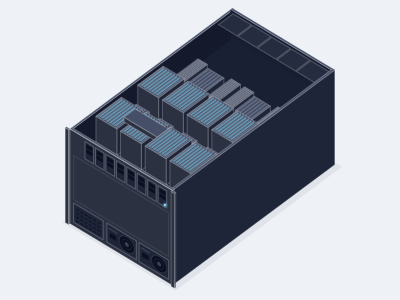
8 GPU HGX B300 AI server, air cooled
Allocation required- GPUs
- 8 x NVIDIA B300, 288 GB HBM3e each
- CPU
- 2 x AMD EPYC 9005 or 2 x Intel Xeon 6
- Memory
- Up to 3 TB DDR5 RDIMM across 24 or 32 slots
- Chassis
- 10U, about 14 kW, air cooled
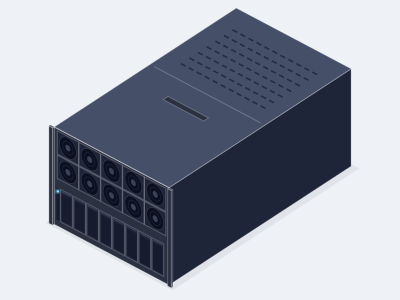
8 GPU HGX B200 AI server
- GPUs
- 8 x NVIDIA B200, 180 GB HBM3e each
- CPU
- 2 x AMD EPYC 9005 or 2 x Intel Xeon 6
- Memory
- Up to 3 TB DDR5 RDIMM
- Chassis
- 8U, about 14 kW, air cooled
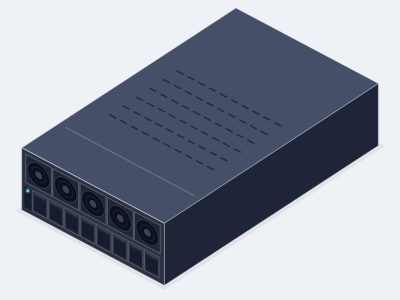
8 GPU H200 NVL PCIe AI server
Available on request- GPUs
- 8 x NVIDIA H200 NVL, 141 GB HBM3e each
- CPU
- 2 x AMD EPYC 9005 or 2 x Intel Xeon 6
- Memory
- Up to 2 TB DDR5 RDIMM
- Chassis
- 4U, about 6.5 kW, air cooled
8 GPU RTX PRO 6000 PCIe AI server
- GPUs
- 8 x RTX PRO 6000 Blackwell Server Edition
- CPU
- 2 x AMD EPYC 9005 or 2 x Intel Xeon 6
- Memory
- Up to 2 TB DDR5 RDIMM
- Chassis
- 4U, about 6.5 kW, air cooled
Related GPUs
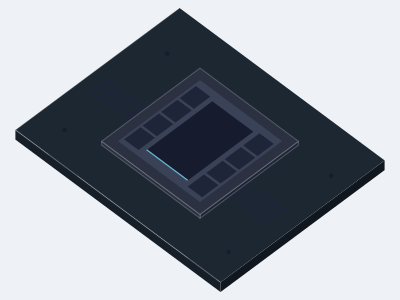
NVIDIA HGX B300
Allocation required- Memory
- 288 GB HBM3e per GPU
- Form
- HGX SXM, 8 GPU
- Best for
- Frontier LLM training, reasoning model inference and large multi node clusters
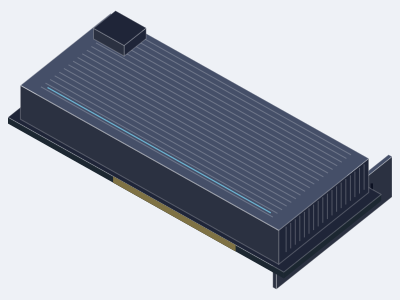
NVIDIA H200 NVL
Available on request- Memory
- 141 GB HBM3e per GPU
- Form
- PCIe, dual slot
- Best for
- Inference and fine tuning in PCIe servers from 2 to 8 GPUs, bridged in pairs or fours
NVIDIA RTX PRO 6000 Blackwell Server Edition
- Memory
- 96 GB GDDR7 with ECC per GPU
- Form
- PCIe, dual slot, passive
- Best for
- Dense PCIe inference, fine tuning, rendering and virtual workstations from 1 to 10 GPUs per server
Talk to us
Sales and specification questions are answered by people who build the systems.
- (858) 613-1818
- sales@computermodules.com
- Monday to Friday, 8am to 5pm Pacific