
Buying data center GPUs, export and registration
Why a GPU purchase comes with paperwork
Advanced GPUs are controlled under the US Export Administration Regulations because of what they can be used for, and NVIDIA requires its channel to register the end user of every data center GPU before it ships. For a buyer in the United States or Canada this adds one short form and one email to the order, and done early it adds no time at all. Done late, after the system is configured and ready, it can hold a shipment on the dock. This guide explains what is controlled, what you will be asked, and how to keep the process off the critical path.
Which products are covered
| Product class | Export controlled | End user registration |
|---|---|---|
| HGX B300, B200, H200 nodes and pods | Yes | Yes |
| GB300 NVL72 and Rubin racks | Yes | Yes |
| H200 NVL PCIe servers | Yes | Yes |
| RTX PRO 6000 Blackwell Server Edition servers | Yes | Yes |
| L40S servers | Yes | Yes |
| RTX PRO 6000 Blackwell Workstation and Max-Q workstations | Controlled above certain thresholds; usually no license for the US and Canada | Not normally |
| RTX 5090 workstations and servers | Consumer card, generally not controlled | No |
| CPU servers, storage, networking | Not controlled as GPUs; general export rules apply | No |
Every product page on this site carries a compliance notice where it applies.
The four things you will be asked for
The end user
The legal name, address and website of the organization that will own and operate the equipment. If you are a reseller, integrator or a parent company buying for a subsidiary, that means the final operator, not you. We cannot register "to be confirmed".
The deployment site
The physical address where the equipment will be installed, and whether it is your own facility or a colocation facility you use. If the equipment is going into your colocation provider's building, you give that address and we handle the rest.
The end use
One or two sentences: "training and serving language models for our software product", "computational chemistry research", "rendering for film production". The purpose is to confirm the equipment is not intended for the end uses the regulations prohibit, such as weapons development. Commercial AI, research, media and enterprise IT are not a concern.
The end use statement
A short signed document that confirms the above, confirms you will not re-export or transfer the equipment to a controlled destination or allow access from one, and confirms you will tell us if any of it changes. It is signed by someone with authority at the end user organization.
Screening
Before we accept an order and again before we ship, we screen the buyer, the end user, the consignee and any intermediary against the US restricted party lists. This takes minutes and you will not notice it unless a name matches, which is almost always a different organization with the same name and is resolved with a phone call.
Destinations and remote access
Controlled GPUs may not be exported or re-exported to countries under US embargo or to the destinations listed in the advanced computing rules, and may not be made available to people in those places by remote access. The remote access point surprises people: a server in Montreal whose users log in from a controlled country is a problem, even though the hardware never moved. Your end use statement commits you to reasonable controls.
Timeline: how to keep it off the critical path
| When | What happens | Your action |
|---|---|---|
| Quotation request | We ask for deployment country and site type | Include them in the request |
| Order confirmation | Screening of the parties; registration form sent | Return the form with the purchase order |
| During build | Registration submitted; end use statement signed | Sign and return within a few days |
| Before shipment | Final screening pass; customs documents prepared | Confirm consignee and importer of record |
Handled this way, the whole process runs while the system is being configured and tested and the shipment leaves on the day the acceptance report is signed. The one thing that stalls it is an incomplete end user: a buyer who does not yet know which entity will own the hardware, or who is waiting on a customer of their own to confirm. Settle that first.
Canada and other destinations
Shipments to Canada are exports from the United States, and the same rules apply, plus Canadian import formalities that our customs broker handles with a commercial invoice and HS codes prepared before pickup. Canada is not a controlled destination and these shipments clear routinely. For destinations outside the US and Canada, contact us before you ask for a quotation and we will tell you plainly whether we can ship, whether a license is needed and how long one takes.
Resellers and intermediaries
If you buy for a customer, you sign the end use statement on their behalf and provide their details, and your customer may be asked to confirm. This protects you as much as us. We treat your customer relationship as confidential and will not contact them except as required for registration.
FAQ
Will my details be shared?
The end user and deployment site are submitted to the manufacturer for registration and kept in our compliance records for the period the regulations require. They are not used for marketing or shared further. Our privacy policy has the detail.
What if my deployment site changes after delivery?
Tell us. An update to the registration is simple when the new site is in the US or Canada. A move to another country may need a license and must be cleared before the equipment moves.
Related systems
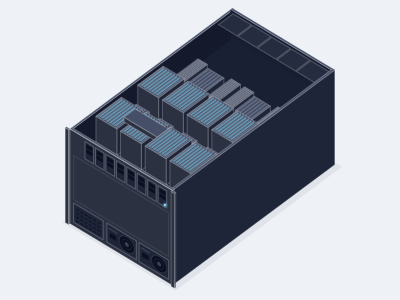
8 GPU HGX B300 AI server, air cooled
Allocation required- GPUs
- 8 x NVIDIA B300, 288 GB HBM3e each
- CPU
- 2 x AMD EPYC 9005 or 2 x Intel Xeon 6
- Memory
- Up to 3 TB DDR5 RDIMM across 24 or 32 slots
- Chassis
- 10U, about 14 kW, air cooled
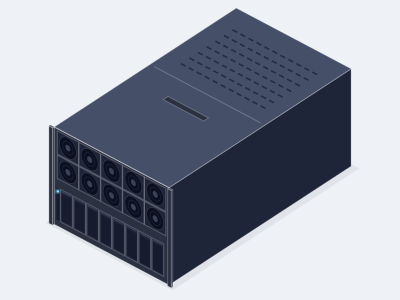
8 GPU HGX B200 AI server
- GPUs
- 8 x NVIDIA B200, 180 GB HBM3e each
- CPU
- 2 x AMD EPYC 9005 or 2 x Intel Xeon 6
- Memory
- Up to 3 TB DDR5 RDIMM
- Chassis
- 8U, about 14 kW, air cooled
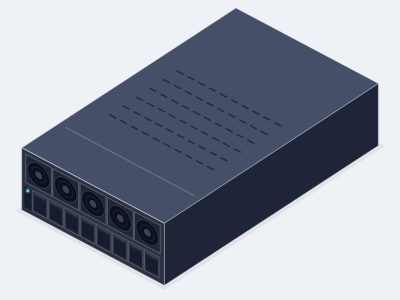
8 GPU H200 NVL PCIe AI server
Available on request- GPUs
- 8 x NVIDIA H200 NVL, 141 GB HBM3e each
- CPU
- 2 x AMD EPYC 9005 or 2 x Intel Xeon 6
- Memory
- Up to 2 TB DDR5 RDIMM
- Chassis
- 4U, about 6.5 kW, air cooled
8 GPU RTX PRO 6000 PCIe AI server
- GPUs
- 8 x RTX PRO 6000 Blackwell Server Edition
- CPU
- 2 x AMD EPYC 9005 or 2 x Intel Xeon 6
- Memory
- Up to 2 TB DDR5 RDIMM
- Chassis
- 4U, about 6.5 kW, air cooled
Related GPUs
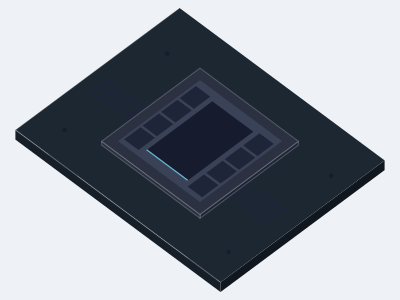
NVIDIA HGX B300
Allocation required- Memory
- 288 GB HBM3e per GPU
- Form
- HGX SXM, 8 GPU
- Best for
- Frontier LLM training, reasoning model inference and large multi node clusters
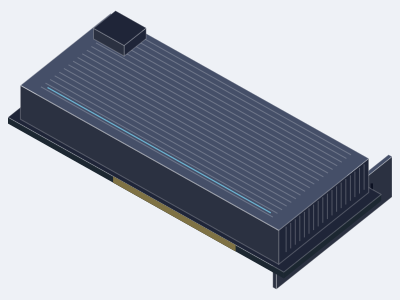
NVIDIA H200 NVL
Available on request- Memory
- 141 GB HBM3e per GPU
- Form
- PCIe, dual slot
- Best for
- Inference and fine tuning in PCIe servers from 2 to 8 GPUs, bridged in pairs or fours
NVIDIA RTX PRO 6000 Blackwell Server Edition
- Memory
- 96 GB GDDR7 with ECC per GPU
- Form
- PCIe, dual slot, passive
- Best for
- Dense PCIe inference, fine tuning, rendering and virtual workstations from 1 to 10 GPUs per server
Ready to specify a system?
Tell us what you are building and we turn it into a specified system with a written quotation.
- (858) 613-1818
- sales@computermodules.com
- Monday to Friday, 8am to 5pm Pacific