
Simulation and HPC
The workload
High performance computing on GPUs covers computational fluid dynamics, structural analysis, molecular dynamics, quantum chemistry, seismic processing, weather and climate, and the fast growing class of physics informed AI models that replace parts of a simulation with a learned surrogate. These codes have run on GPUs for a decade, and the mature ones scale across nodes with MPI over InfiniBand. The newer AI surrogates and foundation models for science look more like LLM training and are sized the same way.
HPC differs from AI in two respects that change the hardware. Many codes need FP64, double precision, which the data center GPUs provide and workstation GPUs mostly do not. And many codes are bound by memory bandwidth and by latency between nodes rather than by raw compute, so the fabric and the memory system matter as much as the GPU count.
What it needs from the hardware
FP64 throughput for the classical codes, which means HGX class GPUs or H200 NVL rather than RTX PRO cards. High memory bandwidth, where HBM3e is the point of the exercise. A low latency fabric: InfiniBand remains the preferred choice for MPI heavy codes, and 400 or 800 Gb/s per node with full non blocking topology keeps strong scaling honest. Plenty of host memory, because pre and post processing, meshing and I/O run on the CPUs, and a parallel file system or at least fast shared NVMe for the results, which in HPC are often larger than the inputs.
Where AI surrogates are part of the pipeline, the same node needs the Tensor Core performance and lower precision formats that training uses, which the Blackwell HGX platforms provide alongside FP64.
Recommended systems
Workstation or small server
For code development, small meshes and teaching, a 4 GPU 4U PCIe server with H200 NVL gives FP64 and HBM in a departmental rack. Where FP64 is not needed, a 4 GPU AI workstation with RTX PRO 6000 Blackwell runs single precision codes and AI surrogates on a desk.
PCIe GPU server
The 8 GPU PCIe server with H200 NVL is the departmental HPC node: eight HBM GPUs with FP64, paired over NVLink bridges, in a chassis that runs on air in a standard high density rack. It covers most single node simulation and is a good citizen in a mixed AI and HPC queue.
HGX node or cluster
The 8 GPU HGX H200 AI server and the 8 GPU HGX B200 AI server are the building blocks of a GPU HPC cluster, with NVSwitch inside the node and an 800 Gb/s InfiniBand rail per GPU between nodes. A 16 node AI pod with a non blocking fabric is a sensible center scale system that runs MPI codes and AI training on the same queue; the HGX B300 is the choice when AI surrogates dominate the mix.
Sizing notes
Match the GPU to the code: check whether your solvers use FP64 and whether the vendor's GPU port scales across nodes, because that decides HGX versus PCIe and InfiniBand versus Ethernet. Plan host memory generously, 240 GB per GPU or more where meshing and post processing are heavy. Give the cluster a shared file system with at least 1 TB usable per GPU and bandwidth to write results from every node at once. Keep the fabric non blocking and keep storage traffic off the compute rails. Our HGX versus PCIe guide covers the interconnect choice in more detail.
Next step
Tell us the codes, the precision they use, the typical problem size and the number of users, and we will propose nodes, fabric and storage that scale together and quote it within one business day. We work with university procurement and grant timelines and can quote in the form your institution requires.
Related systems
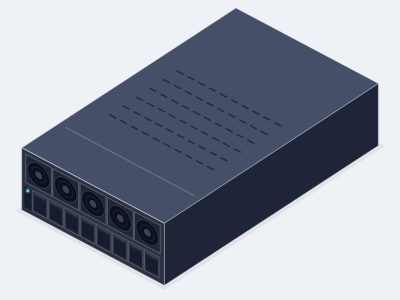
4 GPU PCIe AI server, 4U
- GPUs
- 4 x RTX PRO 6000 Blackwell Server Edition
- CPU
- 2 x AMD EPYC 9005 or 2 x Intel Xeon 6
- Memory
- Up to 2 TB DDR5 RDIMM
- Chassis
- 4U, about 3.5 kW, air cooled
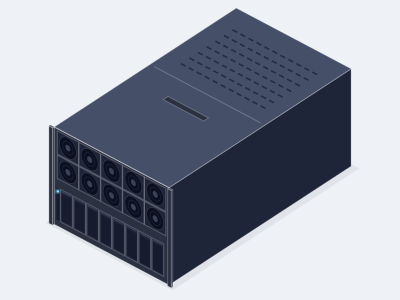
8 GPU HGX H200 AI server
Available on request- GPUs
- 8 x NVIDIA H200 SXM, 141 GB HBM3e each
- CPU
- 2 x AMD EPYC 9005 or 2 x Intel Xeon 6
- Memory
- Up to 3 TB DDR5 RDIMM
- Chassis
- 8U, about 10 kW, air cooled
8 GPU HGX B200 AI server
- GPUs
- 8 x NVIDIA B200, 180 GB HBM3e each
- CPU
- 2 x AMD EPYC 9005 or 2 x Intel Xeon 6
- Memory
- Up to 3 TB DDR5 RDIMM
- Chassis
- 8U, about 14 kW, air cooled
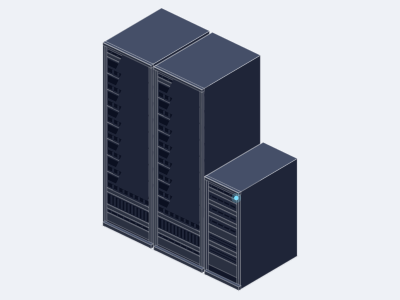
16 node HGX B300 AI pod, 128 GPUs
Allocation required- GPU nodes
- 16 x 8 GPU HGX B300 servers, 128 x B300
- Fabric
- 128 x 800 Gb/s ports, leaf and spine
- CPU and control
- 3 x CPU nodes for data services
- Chassis
- Multi rack, about 245 kW, air or liquid cooled
Related GPUs
NVIDIA HGX B200
- Memory
- 180 GB HBM3e per GPU
- Form
- HGX SXM, 8 GPU
- Best for
- LLM training and inference where proven Blackwell systems and broad software support matter
NVIDIA HGX B300
Allocation required- Memory
- 288 GB HBM3e per GPU
- Form
- HGX SXM, 8 GPU
- Best for
- Frontier LLM training, reasoning model inference and large multi node clusters
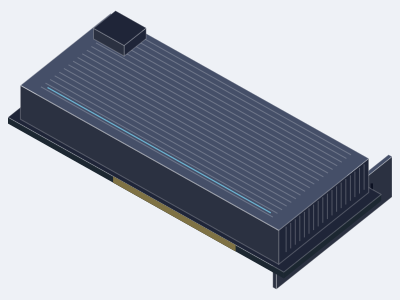
NVIDIA H200 NVL
Available on request- Memory
- 141 GB HBM3e per GPU
- Form
- PCIe, dual slot
- Best for
- Inference and fine tuning in PCIe servers from 2 to 8 GPUs, bridged in pairs or fours
Ready to specify a system?
Tell us what you are building and we turn it into a specified system with a written quotation.
- (858) 613-1818
- sales@computermodules.com
- Monday to Friday, 8am to 5pm Pacific